
Real Money Casino Table Games in Australia
 Available in AU
Content
Learn how live and software-based games work, how table-game rules shape outcomes, and what to consider when comparing formats.
How Online Table Games Work
Online table games can be delivered through a live video stream or generated by software. The distinction is about how the game is presented and how its outcomes are produced; it does not change the legal status of offering real-money casino games in Australia.
Live dealing and streamed equipment
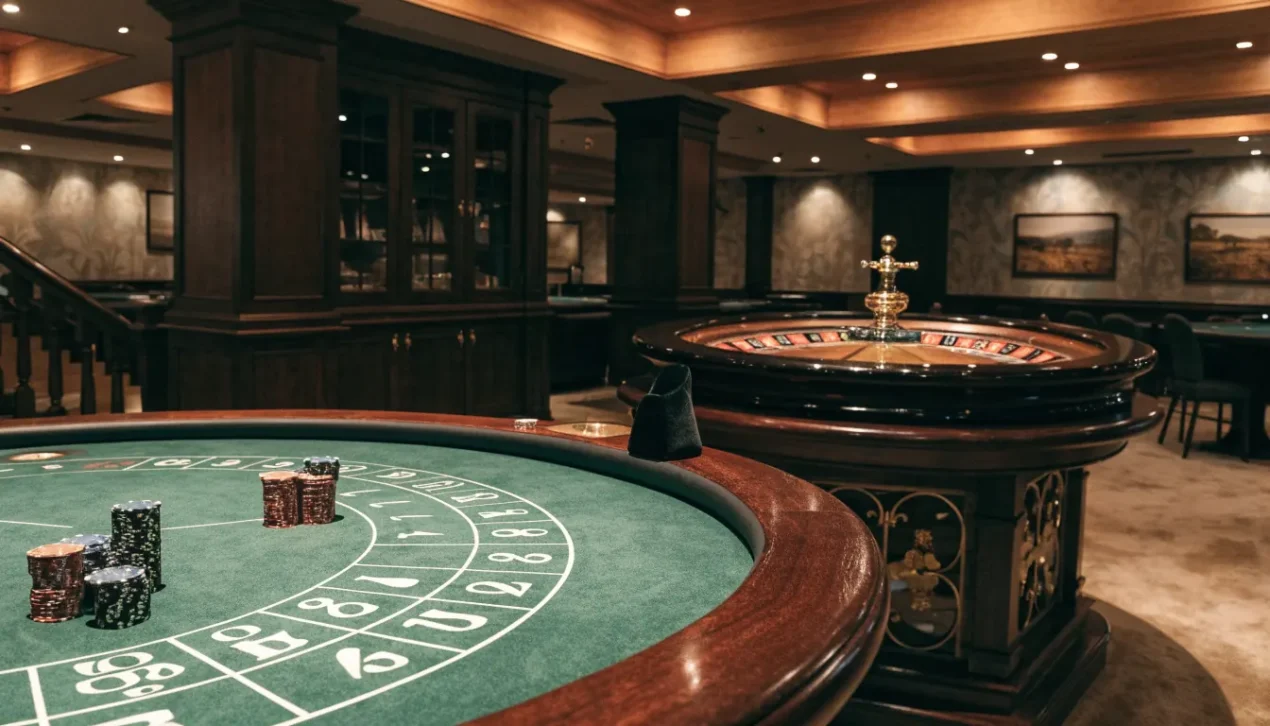
A live-dealer game uses a real dealer and physical casino equipment. Video of the game is streamed to participants, so the action shown comes from a live table rather than an animation generated solely by a game program. The dealer conducts the game while the stream conveys what is happening at the table.
This format combines a physical game in a casino setting with remote viewing. The dealer and equipment are real, but participation takes place through an online interface. The stream is the defining feature: it shows the dealer and the equipment as the game proceeds. A live image alone, however, does not establish anything about the legality of the service or whether it may be offered to people in Australia.
For real-money casino table games in Australia in 2026, checking the available operator details can help you decide what to investigate before playing. Use this list as a reference, and review each casino’s terms and local requirements.
1. WinSpirit Casino
License: Curacao eGaming OGL/2024/923/0383 (Antillephone N.V.) · Min. deposit: A$30
WinSpirit Casino lists a Curacao eGaming OGL issued to Antillephone N.V. Its stated minimum deposit is A$30.
2. Wild Tokyo
License: Curacao · Payout speed: crypto 30-60 minutes, fiat 1-5 days · Min. deposit: A$10
Wild Tokyo lists a Curacao licence and a minimum deposit of A$10. Its stated payout times are 30–60 minutes for crypto and 1–5 days for fiat.
3. 7Bit Casino
License: Curacao, operated by Dama N.V.
7Bit Casino is listed as operating under a Curacao licence, with Dama N.V. named as its operator.
4. Thor Casino
License: Curacao – Antillephone N.V. (Versus Odds B.V.) · Min. deposit: EUR 20
Thor Casino lists a Curacao licence associated with Antillephone N.V. and Versus Odds B.V. Its stated minimum deposit is EUR 20.
5. Golden Pokies
License: Curacao
Golden Pokies is listed with a Curacao licence. No further operator details are provided here.
6. LuckyVibe
License: Curacao Gaming Control Board OGL/2023/176/0095 (Hollycorn N.V.)
LuckyVibe lists a Curacao Gaming Control Board OGL associated with Hollycorn N.V.
7. Uptown Pokies
License: Curacao (operating since 2017) · Min. deposit: A$20
Uptown Pokies lists a Curacao licence, has operated since 2017, and states a minimum deposit of A$20.
8. JustCasino
License: Curacao Gaming Control Board
JustCasino is listed with a Curacao Gaming Control Board licence. No additional details are provided here.
9. DragonSlots Casino
License: Curacao Gaming Authority (Jumpman Gaming Ltd)
DragonSlots Casino lists a Curacao Gaming Authority licence and names Jumpman Gaming Ltd as its operator.
10. House of Pokies
License: international iGaming licence – jurisdiction not named in the source · Payout speed: PayID 1-24 hours · Min. deposit: A$30 (PayID from A$10)
House of Pokies lists an international iGaming licence, but the jurisdiction is not named in the available information. Its stated PayID payout time is 1–24 hours, with a minimum deposit of A$30 or A$10 for PayID.
Software-determined outcomes
In an online version without a live dealer, a Random Number Generator (RNG) determines the outcome. For a card game, the software determines which cards are dealt; for roulette, it determines where the ball lands. The result is produced by the game system rather than by a physical table shown in a live stream.
The presence of a digital table or realistic visual effects does not, by itself, mean that a real dealer or physical equipment is involved. Conversely, a live video feed does not mean the outcome is being produced by the same method as an RNG-based game. The two formats differ in the source of the visible action and in how outcomes are determined.
These categories describe delivery and outcome mechanisms. They do not, on their own, establish whether a game is fair, what its odds are, or whether a particular service is legally permitted. Nor does the word “online” identify a single technical format: it can refer to a streamed live table or to a software-based game.
The Australian legal position
The technical distinction sits within a restrictive legal framework. Section 5 of Australia’s Interactive Gambling Act (IGA) prohibits operators based in Australia from offering real-money interactive casino games to residents. The broader Interactive Gambling Act 2001 makes it illegal for operators to provide real-money online casino games, including table games, to people physically located in Australia. The restriction concerns the provision of the service, not whether the game uses a live dealer or an RNG.
Pokies & Games: Australian Slots and Casino Guide · Bonus Buy Slots in Australia: How They Work
The Australian Communications and Media Authority (ACMA) enforces compliance and blocks unlicensed domestic platforms. Accordingly, a live stream of a dealer does not create an exception to the law, and software-generated outcomes do not place a real-money casino game outside its scope. The format explains how a game is delivered; it does not determine whether an operator may offer it to people in Australia.
This distinction matters when describing casino table games online. A service may present a real dealer and equipment through streaming, or display a software game whose outcomes are RNG-determined. Neither description should be taken as an invitation or indication that real-money play is legally available to Australian residents. The legal restriction applies to the service being provided, rather than to the visual style of its interface.
The same separation applies to descriptions of games labelled as free. A label or presentation does not, by itself, establish how a game is operated or what legal rules apply to a service. The relevant technical distinction remains whether play is shown through a live dealer and physical equipment, or whether software determines the outcome. Legal status must be considered separately, under Australian law.
Thus, “live” refers to the streamed dealer and equipment, while RNG-based play refers to outcomes generated by software. Those terms identify different mechanisms, not different legal permissions. In Australia, real-money online casino games are prohibited when provided to people physically in the country, irrespective of which of these mechanisms is used.
Legal Prohibition
The Interactive Gambling Act 2001 makes it illegal for operators to provide real-money online casino games, including table games, to people physically located in Australia.
Bitcoin Payments and Table-Game Formats
Bitcoin and table-game format refer to different aspects of an online gambling service. Bitcoin is a payment method; live-dealer and RNG-based play describe how a game is delivered and how its outcomes are produced. Those categories should not be treated as interchangeable: the payment label alone does not identify whether a table game uses a streamed dealer or software-generated results.
In a live-dealer format, a real dealer operates casino equipment, with video of the session streamed to players. The stream presents a physical game in progress rather than a digital recreation of every action. The dealer and equipment are part of the game’s live presentation, while the stream carries that presentation to remote participants.
An RNG-based table game instead uses software to determine outcomes. In an online card game, the random number generator determines which cards are dealt; in digital Roulette, it determines where the ball lands. The result is generated within the software rather than shown as the outcome of a physical table session. A graphic may represent a table or wheel, but the visual design does not make the game live-dealer play.
This distinction helps clarify comparisons between Bitcoin-related table games and other online table games. The relevant format questions remain the same regardless of the payment method: whether play is streamed from a real dealer and equipment, or whether software generates the result. A Bitcoin reference does not, by itself, establish either format, nor does it identify the rules or mechanics of a particular game.
Safe Online Pokies in Australia: Bitcoin Risks
The formats also differ in what the player sees. A live stream shows a dealer and physical equipment, while an RNG-based interface displays a software-rendered game state. In both cases, the screen is the point of access, but the underlying method of presenting the game is not the same. A table-like layout on screen is not enough to determine which method is being used; the distinction rests on whether a real game is streamed or software determines the outcome.
The phrase “table game” therefore does not imply a single technical arrangement. It can refer to games delivered through a live stream or to online versions whose outcomes are generated by an RNG. This classification is separate from questions about payment. It also does not establish that every table-game type is available in both formats.
Australian law is an important part of this context. The Interactive Gambling Act 2001 prohibits operators from providing real-money online casino games, including table games, to people physically located in Australia. The Australian Communications and Media Authority enforces the law and blocks unlicensed domestic platforms. A payment method does not alter the legal status of the service: describing a game as Bitcoin-related does not make the provision of prohibited online casino gambling lawful.
Accordingly, terms such as “Bitcoin table games” can combine a payment reference with a game category, but they do not describe a distinct table-game format. The practical distinction in game delivery remains between a real dealer and equipment shown through live video, and an online game in which an RNG determines outcomes. No further conclusion about payment arrangements follows from that distinction.
Table Game Formats
Table games are delivered either through a live stream featuring a real dealer and physical equipment, or via software where a Random Number Generator (RNG) determines the outcomes.
What the Evidence Says About Table-Game Odds
Questions about the best odds at casino table games often invite a simple ranking. A sound comparison, however, depends on more than the name of a game. The rules, available bets and payouts all affect what an odds figure describes.
A house-edge chart is useful only when its figures are tied to stated rules and betting options. A number without that context may not describe every version of a game, or every kind of wager within it. The same caution applies to claims about table-game return to player (RTP): an RTP figure should not be treated as a universal property of a game when the relevant rules and conditions have not been specified.
That definition does not establish an RTP for blackjack, roulette, Poker or other table games. Nor does the use of a random number generator in an online game, by itself, tell how favourable a wager is. The generator determines outcomes; an odds comparison requires information about how bets and payouts are structured.
Blackjack involves a player competing against the dealer, while other games can involve bets on a hand, a tie or the outcome of dice. Poker centres on forming a strong hand. These distinctions explain what is being played, but do not establish which game offers the best casino odds.
Real Cash Online Pokies in Australia: Bitcoin Guide
Roulette illustrates why a game label alone is insufficient for a comparison. European and French Roulette have 36 numbered spaces and a green zero; American Roulette has a green zero and a double zero. Those layouts are relevant structural differences. They do not, on their own, provide a complete comparison of odds across all bets or establish a table-game RTP figure. A responsible chart would need to state what it measures and which version and wager it covers.
This is not a claim that all games have identical odds. It is a distinction between recognising that games differ and having comparable figures that demonstrate the size and direction of those differences.
A useful odds comparison must therefore be read as a specific claim, not as a timeless ranking attached to a game name. Its relevance depends on the rules and wager being assessed, and any RTP figure needs a clear basis. Without those details, a house-edge chart or a “best odds” list can create an appearance of certainty without explaining what its figures represent.
Rules and Outcomes in Table-Game Play
Table-game rules determine what a wager refers to and how a round’s result is assessed. In blackjack, the central comparison is between the player’s hand and the dealer’s: the player aims for a hand value closer to 21. In a dice game, players roll a pair of dice and bet on the outcome. These descriptions identify the basic structure of each game without implying that their rules or settlement procedures are interchangeable.
Blackjack
Organised as a contest against the dealer where the goal is to achieve a hand value closer to 21.
Dice Games
Centred on wagers tied to the outcome of rolling a pair of dice.
Blackjack: a comparison with the dealer
Blackjack is organised around a contest against the dealer, rather than a direct contest between players. The relevant outcome is whether the player’s hand is closer in value to 21 than the dealer’s. The target gives the comparison its focus: the hand is assessed by its value in relation to 21 and to the dealer’s hand.
This basic objective does not, by itself, describe every rule that can affect a round. A game’s full rules specify how hands are formed and how different results are settled. Those details should not be assumed to be identical across every version. The core mechanic, however, remains a comparison between the player and dealer, with proximity to 21 defining the aim.
That structure matters when describing how blackjack works. It is not simply a wager on whether a particular card will appear; the result concerns the value of a hand in relation to the dealer’s. Nor does the basic objective establish anything about the likelihood of a particular result or the expected return from play. Those are separate questions from the rules that define the contest.
Dice play: a wager on a pair’s outcome
A dice game has a different structure. Players roll a pair of dice and place bets on the outcome. The wager is therefore connected to what happens when the dice are rolled, rather than to a hand being compared with a dealer’s hand.
Mines Casino Game in Australia: Evidence and Access
The general description does not identify a single set of possible bets or a universal method for settling them. Those depend on the rules of the particular game. The useful distinction is that the dice provide the result on which the bet is based; in blackjack, the result instead comes from comparing hand values.
Rules are not rankings
These mechanics explain what each game asks players to follow: blackjack centres on a hand approaching 21 in competition with the dealer, while dice play centres on a wager tied to a pair’s outcome. They do not establish that one format is simpler, more favourable or more suitable than another. Such conclusions would require information beyond the basic structure of play.
In Australia, the legal setting also limits what “playing” these games online can mean. Under the Interactive Gambling Act 2001, operators are prohibited from providing real-money online casino games, including table games, to people physically located in Australia. The Australian Communications and Media Authority enforces the rules and blocks unlicensed domestic platforms. Descriptions of game mechanics should therefore not be read as an invitation to access real-money online casino services.
Finding a Nearby Casino with Table Games
A search for a nearby casino with table games is a request about physical location: it seeks a venue within practical reach, rather than an explanation of how a game works. The wording can also refer to different jurisdictions. Searches mentioning Miami or Ohio, for instance, point to places outside Australia and do not establish anything about Australian venues.
Attention: A foreign location or offshore operation does not make an online casino service lawful for customers physically located in Australia.
In Australia, proximity does not determine whether real-money online casino play is lawful. The Interactive Gambling Act 2001 prohibits operators from providing real-money online casino games, including table games, to people physically located in Australia. The prohibition applies to online services, not simply to services operated from within the country. A foreign location or offshore operation therefore does not make an online casino service lawful for Australian customers.
The Australian Communications and Media Authority enforces the law and blocks unlicensed domestic platforms. These rules concern the provision of interactive gambling services; they do not, by themselves, identify a physical venue or establish which games are offered at a particular address. Likewise, a location phrase such as “nearest casino” cannot establish that a venue has table games, that those games are available at a given time, or that an online service associated with a venue may lawfully be used from Australia.
This distinction matters because physical casinos and online casino services are not interchangeable categories. A location-based request may be intended to find a building, while a result may instead refer to an online service. The legal position described by the IGA concerns real-money interactive services provided to people in Australia. It should not be treated as evidence about the existence, distance or table-game facilities of a physical venue.
Crash Casino Games in Australia: Laws and Risks
The law also does not place criminal liability on an individual merely for playing at an offshore casino without a local licence. That point does not change the restriction on operators providing prohibited services to people in Australia, nor does it mean that offshore casino services are approved or endorsed. Australian law prohibits advertising real-money interactive gambling services, including online casinos, to Australian audiences.
Location-based wording can therefore be read narrowly: it expresses an interest in a nearby physical venue and its table-game facilities. It is not, on its own, evidence of what is available locally, and it cannot be used to infer that an online casino is a lawful substitute. The relevant distinction is between a physical place and an online gambling service, with the IGA applying to the latter when real-money casino games are provided to people in Australia.
What Counts as a Casino Table Game?
A casino table game is a game organised around a defined set of rules, player choices or bets, and an outcome produced through cards, dice, a wheel or another game mechanism. The term describes a format of play rather than a single title. Blackjack, Poker, Roulette and dice games are examples, though their rules and the way outcomes are generated differ.
The physical table is not essential to the definition. Online versions can reproduce the structure of a table game through a digital interface. In an RNG-based game, a Random Number Generator determines outcomes such as the cards dealt or the Roulette pocket where the ball lands. The screen presents the result, but the outcome is generated by software rather than by a physical dealer conducting that round.
RNG-based outcomes
In an RNG-based game, a Random Number Generator determines results such as the cards dealt or the Roulette pocket where the ball lands, with the screen presenting the software-generated result.
Live-dealer games use a different delivery method. A real dealer operates real casino equipment, with video streamed to players. The stream shows the game taking place, while the digital interface provides a way to take part remotely. This distinction concerns how the game is conducted and presented; it does not, by itself, establish anything about the rules, odds or legal status of a service.
These formats help clarify what is meant by table games at a casino, whether the setting is a physical venue or an online interface. A game does not become a table game merely because it appears on a screen, nor does every casino-style game follow the same structure. The relevant feature is the underlying game: for example, cards dealt to form hands, bets placed on a wheel outcome, or wagers tied to the result of dice.
Some games involve a contest between a player’s hand and a dealer’s hand. Others allow bets on different hands or on a tie, or centre on building a strong Poker hand. Roulette is organised around a wheel and numbered pockets, while a dice game involves a pair of dice and bets on their outcome. These examples illustrate the breadth of the category without implying that every casino offers every format.
The word “table” can therefore refer either to the physical equipment used in a venue or to the game structure represented in a digital version. In a live stream, the physical table and equipment are visible. In an RNG-based version, software supplies the outcome, even when the interface resembles a table. Both may be described as table-game formats, but they should not be treated as mechanically identical.
Aristocrat Online Pokies in Australia: What to Know
This definition is limited to games whose play is organised around such mechanisms and wagers. It does not include a claim about which games are offered in a particular place, nor does it establish that a digital service is lawful or accessible in Australia. The delivery format and the legal position are separate questions.
Game Types and Their Basic Mechanics
Table games can be grouped by the object of a wager or by the task players are trying to complete. Some bets concern which hand will prevail; Poker, by contrast, centres on assembling a strong hand. These categories describe different ways of framing play, rather than a complete catalogue of games or a ranking of them.
In one hand-based format, the available wagers can be placed on the player’s hand, the Banker’s hand or a tie. The three choices identify the outcomes being backed: one side, the other side, or neither side winning outright. This gives the format a straightforward structure at the level of the wager, even though the names of the betting options alone do not describe every rule that might govern a particular game. The distinction is useful when comparing table-game formats because it shows what the wager is tied to, without implying that all games use the same procedure.
Do
- Identify wagers based on the player’s hand, the Banker’s hand, or a tie.
- Focus on hand construction when playing Poker.
Don’t
- Assume all table games use the same procedure.
- Treat Poker as a single uniform format based only on its shared objective.
Poker has a different organising principle. Players compete to build the best possible Poker hand. Its central aim is therefore hand construction, rather than simply selecting between a player’s hand, a Banker’s hand or a tie. This broad description identifies what participants are trying to achieve, but does not specify a particular Poker variant or its detailed rules. Poker should not be treated as a single uniform format on the basis of this shared objective alone.
These examples show why a casino table-games list can include formats with distinct structures. The wording of a wager may focus on which hand or outcome is selected, while another game may be framed around the strength of a hand players build. That difference offers a basic descriptive way to sort table games without suggesting that the examples cover every format.
The same distinction applies when these games are presented with a live dealer or through online software: delivery does not change the broad objective described here. In Australia, however, real-money online casino-style games are prohibited services when offered to people in the country under the Interactive Gambling Act 2001. The game categories can be described as forms of play, but that description is not an invitation to access them online.
Card Games: Hands, Opponents and Bets
Card-based table games can be distinguished by what a hand is compared with and how the contest is framed. In Blackjack, a player’s hand is measured against the dealer’s. In Poker, players seek to build the strongest possible hand. These differences shape the roles at the table: Blackjack is a player-versus-dealer contest, while Poker centres on the hands held by players.
Best-Paying Online Pokies in Australia: What to Know
In Blackjack, the aim is to finish with a hand value closer to 21 than the dealer’s. The comparison is between the player’s total and the dealer’s total, rather than a contest to make the best hand among all players. The dealer therefore serves as the opposing hand in each comparison. This basic structure is what separates Blackjack from card games in which players compete directly against one another.
Poker is organised around constructing a strong hand. Players compete to form the best possible combination of cards, making the hand itself central to the contest. Unlike Blackjack’s comparison with the dealer, Poker’s defining objective is to produce a hand that stands up against those of other players. The precise form of play can vary, but the broad aim remains focused on hand strength.
The phrase “casino card table games” covers more than one kind of contest. Some games place a player’s hand against a dealer’s; others set players’ hands against each other. That distinction is more informative than treating all card tables as variations on a single format. It also clarifies why Blackjack and Poker are not interchangeable simply because both use cards and hands.
The terminology should not imply that every card game follows the same structure. A hand can function as a total compared with a dealer, as in Blackjack, or as a combination whose strength matters in competition with other players, as in Poker. The opponent and the role of the hand together define the basic mechanics.
Card Game Mechanics
- Blackjack is a player-versus-dealer contest focusing on a hand value close to 21.
- Poker centres on players competing to build the strongest possible hand.
- The role of the hand and the identity of the opponent define the basic mechanics of the game.
In Australia, the Interactive Gambling Act 2001 prohibits operators from providing real-money online casino games, including Blackjack and Poker, to people in the country. This legal context concerns the provision of online services; it does not change the distinction between the games’ card-based mechanics.
Roulette Variants and Their Number Layouts
Roulette is offered in several versions, with European, French and American layouts among the main forms. Their names distinguish variants of the same casino table game, but the number arrangement is not identical across all three. The central structural difference concerns the green zero pockets.
European Roulette has 36 numbered pockets and a green pocket marked 0. French Roulette has the same stated layout: 36 numbers and a green 0. The shared arrangement is a useful way to distinguish both versions from American Roulette, which includes a green 0 as well as a green 00. The double-zero pocket is the defining layout difference described for the American form.
New Australian Online Pokies: What Can Be Verified
These details concern the wheel’s numbered spaces, rather than a separate set of casino table games rules. They identify which variant is being presented and clarify what its layout contains. The labels “European” and “French” do not signal a difference in the number of numbered pockets described here; both have 36, alongside the single green zero. American Roulette is distinguished by the additional green double zero.
In online roulette, the variant name and layout are relevant because they describe the version represented in the game. A display may show the wheel and its pockets, making the single-zero or double-zero arrangement visible. The names alone, however, do not establish any further feature of a particular game.
Descriptions of roulette can sometimes blur the distinction between the numbered pockets and the green spaces. The green 0 is present in all three variants discussed here. What separates American Roulette is the presence of 00 as well. European and French Roulette are alike on the stated layout details, while the American version has both green markers.
Dragon Link Online Pokies in Australia: What’s Verified
Likewise, references to free table games, rentals or promotions do not change the defining distinction among these roulette layouts. The relevant classification remains straightforward: European and French Roulette have 36 numbers and a green 0; American Roulette has a green 0 and a green 00.
Poker as a Casino Table Game
Poker is a casino table game centred on forming the strongest possible hand. Its defining contest is between players seeking to build the best hand, rather than a player trying to reach a target value against a dealer. The objective gives poker its basic structure; the exact rules depend on the particular form of the game.
The phrase “casino poker” covers a category, not one uniform set of procedures. Different versions may organise the contest differently, so the name alone does not establish how a hand is formed or how a winner is determined. Pai Gow Poker is one term sometimes used in this category, but its specific rules should not be inferred from the general description of poker. A variant’s own rules are needed to explain its play accurately.
Real-money online pokies in Australia: legal guide
This distinction matters when describing poker table games: the shared feature is the effort to make the best possible poker hand, while details belong to the individual game. A broad label therefore cannot support claims about every version’s dealing, betting or settlement rules.
There is also a separate legal context for casino-style poker in Australia. Under the Interactive Gambling Act 2001, operators are prohibited from providing real-money online poker and other casino games to people located in Australia. The Australian Communications and Media Authority enforces the law, including by blocking unlicensed domestic platforms. This means that a description of poker as a casino game should not be read as an endorsement or an indication that real-money online play is legally available in Australia.
Can you play table games online for real money?
No, real-money online casino games are prohibited when offered to people physically in Australia, whether the game uses a live dealer or an RNG.
Can you legally gamble online in Australia?
Real-money online casino games are prohibited for people physically in Australia, regardless of whether the operator uses live dealers or RNG-based games.
How long do withdrawals typically take from offshore casinos to Australian bank accounts?
Direct transfers to bank accounts typically take 3–7 business days.
Related posts

Safe Online Pokies in Australia: Bitcoin Risks

Real Cash Online Pokies in Australia: Bitcoin Guide